

5 ways Pillcheck helps businesses manage benefits costs
More and more Canadians use prescription drugs for chronic diseases and mental health problems, and these drive the cost of drug plans and disability benefits. At the same time, medications don't work the same way for everyone. When an employee is unwell and their treatment isn't working, their performance can suffer, colleagues take on extra work, deadlines slip and stress rises across the team. This article explains how pharmacogenetic testing with Pillcheck helps employers and plan sponsors manage these costs in five ways.
Why does trial-and-error prescribing cost employers?
Almost everyone carries at least one genetic variation that can change how their body responds to a medication. In a study of more than 7.7 million US veterans, researchers projected that 99% carry at least one such variation. Without this information, finding the right medication at the right dose can be slow, expensive and sometimes risky.

A standard trial-and-error approach to prescribing can lead to medications that don't work well enough, the use of more medications than needed, and side effects and complications caused by the drugs themselves.
How does pharmacogenetics reduce the guesswork?
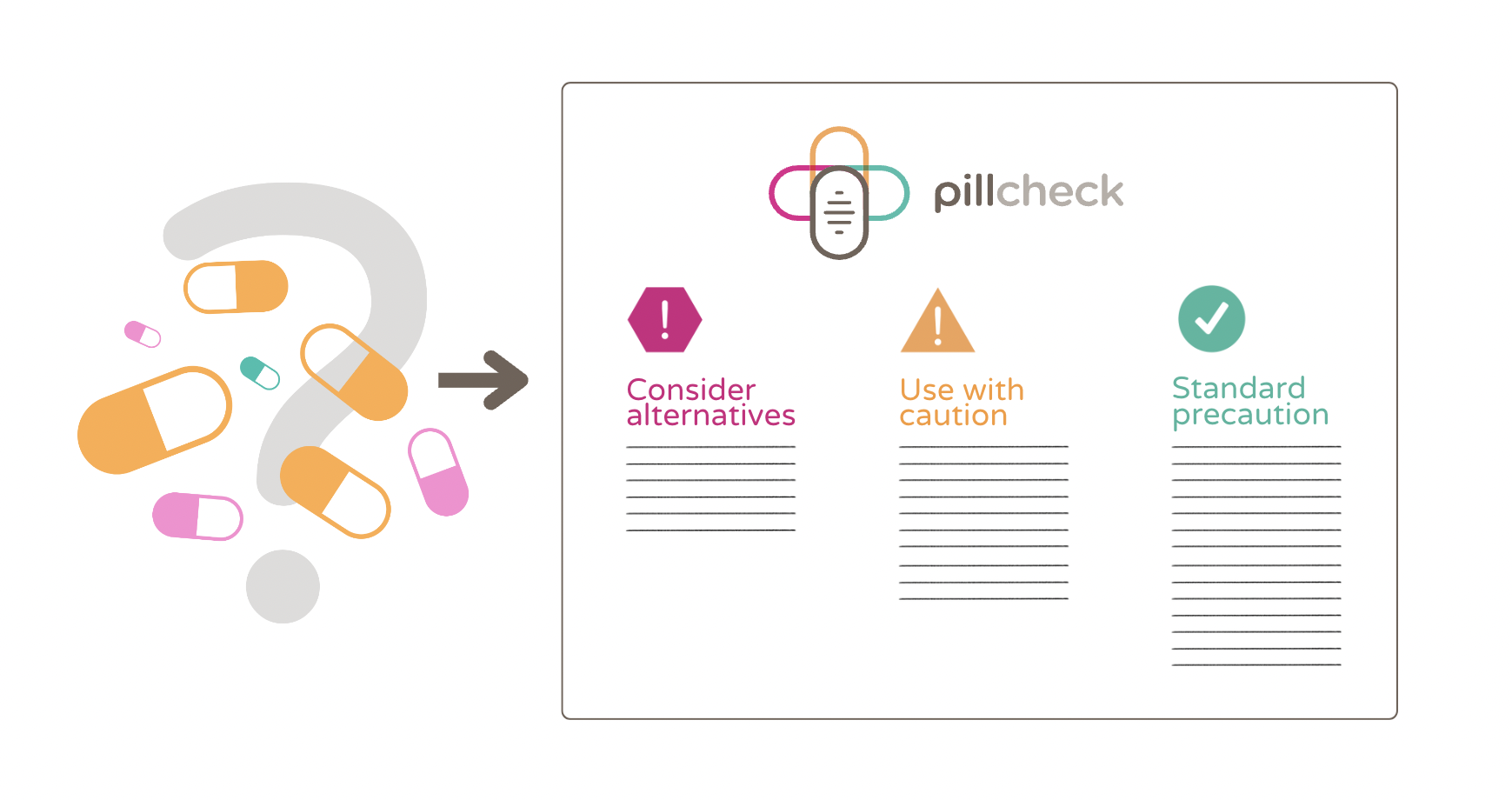
Pillcheck matches medications to a person's genetic profile. The report shows which medications are likely to work as expected, which need caution or a different dose, and which should be replaced with an alternative. This helps people manage their health conditions with less suffering, lost productivity and time off work.
What are the five ways Pillcheck helps manage plan costs?
Pillcheck offers pharmacogenetics-guided medication management programs for the workplace. When the Pillcheck benefit is offered to plan members as a voluntary option, it can help plan sponsors save in five areas.
1. Lower drug plan and health benefits costs
Savings come from avoiding medications that are unlikely to work and from reaching remission sooner. A 2023 economic analysis published in the CMAJ modelled pharmacogenetic testing for adults with moderate to severe depression in British Columbia. It projected savings of about $4,900 per patient over 20 years, mainly by preventing treatment-resistant depression, and estimated that the cost of testing would be recovered within about 2 years. Some insurers and employers, such as Canada Life, Medavie Blue Cross and Bell Canada, offer their plan members access to Pillcheck at a preferred price.
2. Less absenteeism and presenteeism
The rising cost of disability claims gets a lot of attention, but presenteeism, when employees come to work while unwell and less productive, is also costly for employers. Pharmacogenetic testing can benefit employees who keep working despite a mental health condition that isn't responding to medication. Pillcheck can shorten the search for the right medication and dose, helping employees feel better sooner, improving productivity and reducing the risk of a disability leave. Employees can pay for Pillcheck through a Health Spending Account (HSA), a Personal Wellness Account or Extended Health Benefits (EHB).
3. Lower short-term disability costs
Pillcheck helps healthcare providers find and fix medication problems. In a study in two Shoppers Drug Mart pharmacies in Toronto, pharmacists used Pillcheck results to identify an average of 1.3 drug therapy problems per patient that were directly related to the genetic results. Most of their recommendations to physicians were to change the medication (60%) or adjust the dose (13%).
Getting the medication right also supports other treatments. A 2021 meta-analysis in JAMA Psychiatry found that, for people with depression, starting with medication and then adding psychotherapy lowered the risk of relapse.
4. Lower recruiting costs through better retention
Finding and keeping talented employees is difficult. In a 2019 survey of more than 1,500 US workers reported in the Harvard Business Review, 34% of respondents had left a job in the past for mental health reasons, voluntarily or not. This rose to 50% among millennials and 75% among Generation Z. By helping plan members who need medication get the right prescription, employers can reduce turnover and recruiting costs.
Because a person's DNA does not change, Pillcheck is a once-in-a-lifetime benefit that helps plan members make informed decisions whenever they need a new prescription. Report updates are free of charge as new guidelines and drug labels become available, and Pillcheck lets members know when an update is posted. Learn more about Pillcheck.
5. Lower long-term disability costs
Finding the right drug at the right dose sooner helps people feel better and return to work, which can prevent a long-term disability claim or shorten it. In a randomized clinical trial in three Canadian community pharmacies, published in 2021, people with depression or anxiety whose antidepressant treatment was guided by Pillcheck had greater improvement in depression, anxiety and disability over six months than those who received standard treatment. Learn more about the Pillcheck randomized trial.
Disability insurers, including Canada Life, Medavie Blue Cross and Empire Life, include Pillcheck in their disability benefits. Bell Canada also covers Pillcheck for eligible disability claimants. The Pillcheck service is voluntary and helps motivated claimants return to work sooner.
Pillcheck is also part of employer-sponsored benefits offered by selected trade unions with a long-term focus on member wellness.
How can Pillcheck help your organization?
Pillcheck combines a DNA test from a simple cheek swab with a medication review by pharmacists trained in pharmacogenetics. Workplace programs are designed so that the plan administrator can manage use of the benefit and measure its impact with aggregated, anonymized reports.
Pillcheck testing is performed in CAP- and COLA-accredited clinical genetic laboratories located in Canada. Pillcheck reports on 24 genes, increasing coverage with new guidelines and drug labels (see the genes tab), and covers 355 medications, which account for over 70% of dispensed prescriptions. The Pillcheck test panel ensures high accuracy for people of non-European and admixed ancestries. Your results last a lifetime, and report updates are free of charge.
To learn more about adding Pillcheck to a health benefits plan, contact us at info@pillcheck.ca.
Summary
- Trial-and-error prescribing drives up drug plan, absence and disability costs.
- Pillcheck helps plan sponsors save in five areas: drug plan costs, absenteeism and presenteeism, short-term disability, recruiting and retention, and long-term disability.
- Pillcheck is a one-time, voluntary paramedical benefit, and its results last a lifetime.
- HR professionals and benefits advisors can add a Pillcheck program to any benefits package and measure its impact with anonymized reports.
Frequently asked questions
How can employees pay for Pillcheck?
Employees can use a Health Spending Account (HSA), a Personal Wellness Account or Extended Health Benefits, depending on their plan. Some insurers, employers and trade unions include Pillcheck in disability or health benefits or offer it at a preferred price.
Do employers see their employees' results?
No. Plan administrators receive only aggregated, anonymized information to manage the program and measure its impact.
Does Pillcheck need to be repeated?
No. A person's genes do not change, so the results last a lifetime. Report updates are free of charge.
Is there evidence that Pillcheck improves outcomes?
Yes. In a randomized clinical trial in Canadian community pharmacies, people with depression or anxiety whose treatment was guided by Pillcheck improved more in depression, anxiety and disability over six months than those who received standard treatment.
References
- Chanfreau-Coffinier C, Hull LE, Lynch JA, et al. Projected prevalence of actionable pharmacogenetic variants and level A drugs prescribed among US Veterans Health Administration pharmacy users. JAMA Netw Open. 2019;2(6):e195345. doi:10.1001/jamanetworkopen.2019.5345
- Ghanbarian S, Wong GWK, Bunka M, et al. Cost-effectiveness of pharmacogenomic-guided treatment for major depression. CMAJ. 2023;195(44):E1499-E1508. doi:10.1503/cmaj.221785
- Papastergiou J, Tolios P, Li W, Li J. The Innovative Canadian Pharmacogenomic Screening Initiative in Community Pharmacy (ICANPIC) study. J Am Pharm Assoc. 2017;57(5):624-629. doi:10.1016/j.japh.2017.05.006
- Guidi J, Fava GA. Sequential combination of pharmacotherapy and psychotherapy in major depressive disorder: a systematic review and meta-analysis. JAMA Psychiatry. 2021;78(3):261-269. doi:10.1001/jamapsychiatry.2020.3650
- Greenwood K, Bapat V, Maughan M. Research: people want their employers to talk about mental health. Harvard Business Review. October 7, 2019. hbr.org
- Papastergiou J, Quilty LC, Li W, et al. Pharmacogenomics guided versus standard antidepressant treatment in a community pharmacy setting: a randomized controlled trial. Clin Transl Sci. 2021;14(4):1359-1368. doi:10.1111/cts.12986
