

How to get a pharmacogenetic test in Canada
Pharmacogenetic tests are available online directly to consumers and may even be covered by your health insurance or Health Spending Account! This article explains, step by step, how to get a pharmacogenetic test in Canada: where to order one, what happens after you order, how much it costs, what your benefits plan may cover and how to share your results with your doctor.
What is pharmacogenetic testing?
No two people are biologically identical. Precision medicine aims to replace the one-size-fits-all approach, where treatment strategies are designed for the "average" person. Pharmacogenetics (also known as pharmacogenomics, or PGx) examines genetic differences in how our bodies process medications. When a medicine is taken, it is broken down by enzymes that are encoded by our DNA. Because of variations in our genes, these enzymes process different drugs at different rates, so a drug and dose that work well for one person may cause side effects or be ineffective for another. In fact, most of us (over 99%) carry genetic variations that affect drug response.

PGx insights can help your doctor narrow down the list of potential treatments that are most likely to be safe and effective for you, instead of trying one medicine, and if it doesn't work, another and another.
Where can I get a pharmacogenetic test in Canada?
PGx tests are available to consumers online, through workplace benefits programs, and at select pharmacy and clinic partners:
- Online. You can order directly from a company, such as Pillcheck, that offers a PGx service online, with or without a doctor's prescription or requisition.
- Through a clinic or pharmacy. Some pharmacies and specialized clinics, such as an ADHD clinic, can refer you to PGx testing as part of their services.
- Through your benefits plan. Your group benefits plan may provide coverage or offer access to preferred pricing for the test.
Provincial health plans generally do not cover PGx testing for most medications. Ontario, for example, funds DPYD testing in hospital laboratories for people about to start certain chemotherapy drugs, but not broader medication testing.
How does it work, step by step?
- Order the test online, or through your clinic, pharmacy or benefits plan.
- Collect your sample at home. Pillcheck uses a simple, non-invasive cheek swab that you mail to the lab in a prepaid envelope.
- The lab analyzes your DNA. Pillcheck testing is performed in CAP- and COLA-accredited clinical genetic laboratories in Canada.
- A pharmacist reviews your results together with all your current medications and supplements, and prepares a Pharmacist Opinion Letter with recommendations.
- Share your results with your doctor. Pillcheck enables secure sharing of results with any healthcare practitioner you choose.
- Decide on any changes together. Don't change your medications based on a pharmacogenetic test until your doctor has reviewed your results.
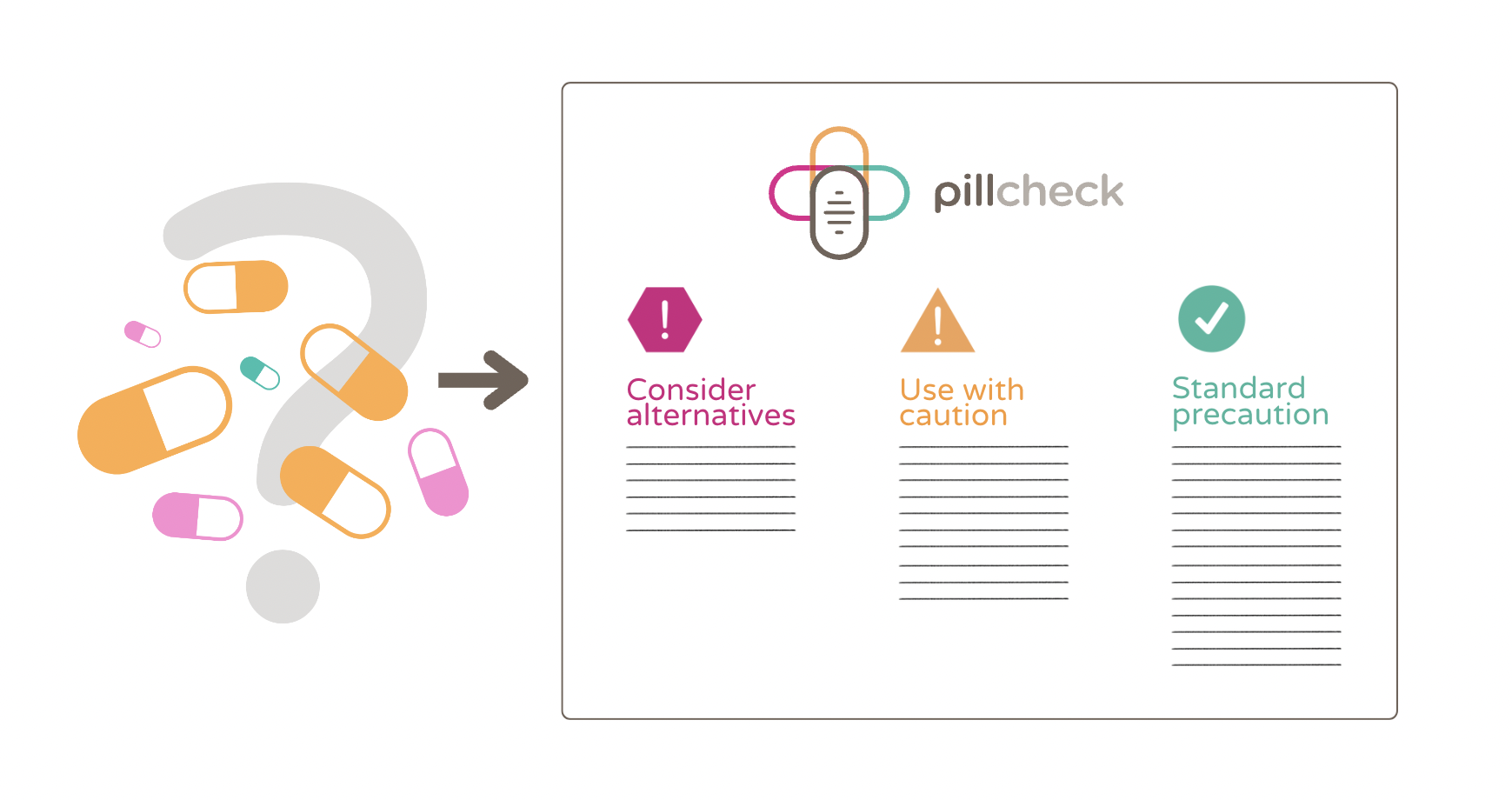
Learn more about what a pharmacist medication review includes.
How much does pharmacogenetic testing cost?
Prices typically range from $300 to $1,200 CAD, depending on the conditions covered, the scope of service and how results are delivered and maintained over time. PGx tests cannot be assumed to be identical or interchangeable. Some providers offer a one-time test and report; others also include a review by a pharmacist or geneticist.
The Pillcheck service includes a comprehensive PGx test, a pharmacist's review of your medications and yearly report updates for a total of $599. Since the same set of genes affects many medications, one Pillcheck covers medications for a wide range of health concerns, including mental health, pain, heart, digestive, neurology, women's health and cancer medications, and new medications are added to your report as guidelines expand, at no extra cost.
Is pharmacogenetic testing covered by insurance?
Coverage is growing. A 2025 review of 10 Canadian insurers with public PGx policies found that six offered partial reimbursement or discounted pricing to all members, while four limited full coverage to people who meet specific criteria, such as being on disability leave. Canada Life, Medavie Blue Cross and Empire Life include Pillcheck in disability benefits, and Canada Life and Medavie Blue Cross offer plan members a preferred price.
- Health Spending Account (HSA). A PGx test is an eligible HSA expense when it is prescribed by a doctor or accompanied by a medication review by a licensed pharmacist. Learn more about reimbursement through a benefits plan.
- Extended health benefits. Some plans reimburse PGx testing; check with your plan administrator.
- Taxes. You can submit the receipt as a medical expense for tax claims.
- Once in a lifetime. Insurers typically reimburse PGx testing only once, so choose a provider that will serve you well now and support future medication decisions.
Provincial health authorities also point patients to private coverage: the BC Ministry of Health, for example, notes that PharmaCare and MSP do not pay for PGx tests, but many private health insurers help cover the cost.
Is a PGx test worth it?
Pharmacogenetic reports give you and your doctor an evidence-based tool to take a closer look at your medications. At Pillcheck, we've done extensive, published research showing that people feel better sooner with pharmacogenetics-guided care, and a large European study published in The Lancet found that pharmacogenetics-guided prescribing led to about 30% fewer clinically relevant side effects. PGx can mean the difference between prolonged suffering and time off work, and effectively managing a health condition. Read more about whether genetic testing is worth it.
What should I ask before ordering?
- Does the test cover medications for many conditions, not just one?
- Does it detect extra and missing copies of the CYP2D6 gene, and include variants common in diverse ancestries?
- Is it performed in an accredited clinical laboratory, with recommendations based on clinical guidelines?
- Does a pharmacist or other expert review your results with all your medications?
- Is your report updated as guidelines change, and is your genetic information kept private?
Read our full checklist on how to compare pharmacogenetic tests.
▶️ Watch more about privacy and security with Pillcheck
▶️ Watch how Pillcheck helps you and your healthcare provider choose the right medications
Pillcheck testing is performed in CAP- and COLA-accredited clinical genetic laboratories located in Canada. Pillcheck reports on 24 genes, increasing coverage with new guidelines and drug labels (see the genes tab), and covers 355 medications, which account for over 70% of dispensed prescriptions. The Pillcheck test panel ensures high accuracy for people of non-European and admixed ancestries. Your results last a lifetime, and report updates are free of charge.
Summary
- A pharmacogenetic (PGx) test shows how you are likely to respond to many medications, reducing guesswork in choosing a medication and dose.
- In Canada, you can order a PGx test online, through some clinics and pharmacies, or through your benefits plan.
- The process is simple: a cheek swab at home, analysis in an accredited lab, a pharmacist review and secure sharing with your doctor.
- Prices range from about $300 to $1,200; Pillcheck costs $599, including the pharmacist review and report updates.
- Many private plans cover or discount PGx testing, and it is an eligible HSA expense when prescribed by a doctor or accompanied by a pharmacist medication review.
- If the test is comprehensive, you only need to do it once.
Frequently asked questions
Do I need a doctor's prescription to get a pharmacogenetic test?
Not for Pillcheck: you can order it online yourself. A prescription can help with insurance reimbursement, and your doctor should review your results before any medication changes.
Is pharmacogenetic testing covered by OHIP or other provincial plans?
Generally, no. Provincial plans don't cover PGx testing for most medications, but many private plans, Health Spending Accounts and the medical expense tax credit can help with the cost.
Do I need to repeat the test?
No. Your DNA doesn't change, so a comprehensive test lasts a lifetime, and Pillcheck adds new medications to your report as guidelines expand.
Can I use the results for medications other than mental health?
Yes. Pillcheck covers medications for many areas, including pain, heart, digestive, neurology, women's health and cancer medications.
References
- McInnes G, Lavertu A, Sangkuhl K, et al. Pharmacogenetics at scale: an analysis of the UK Biobank. Clin Pharmacol Ther. 2021;109(6):1528-1537. doi:10.1002/cpt.2122
- Papastergiou J, Quilty LC, Li W, et al. Pharmacogenomics guided versus standard antidepressant treatment in a community pharmacy setting: a randomized controlled trial. Clin Transl Sci. 2021;14(4):1359-1368. doi:10.1111/cts.12986
- Swen JJ, van der Wouden CH, Manson LE, et al. A 12-gene pharmacogenetic panel to prevent adverse drug reactions: an open-label, multicentre, controlled, cluster-randomised crossover implementation study. Lancet. 2023;401(10374):347-356. doi:10.1016/S0140-6736(22)01841-4
- Brubaker-Plitt R, Bousman CA. Pharmacogenetic testing coverage by Canadian insurance providers. Pharmacogenet Genomics. 2026;36(1):18-22. doi:10.1097/FPC.0000000000000579
- Muller-Gass A, Mukerjee G, Dorfman R, Jetly R. Implementation of pharmacogenomics testing in daily clinical practice: perspectives of prescribers from two Canadian Armed Forces medical clinics. J Pers Med. 2025;15(3):101. doi:10.3390/jpm15030101
- BC Ministry of Health. Pharmacogenomics testing: information for patients. gov.bc.ca
